
Share Paul Aimé Fluery V's obituary with others.
Invite friends and family to read the obituary and add memories.
Stay updated
We'll notify you when service details or new memories are added.
You're now following this obituary
We'll email you when there are updates.
Select your format and elements to print

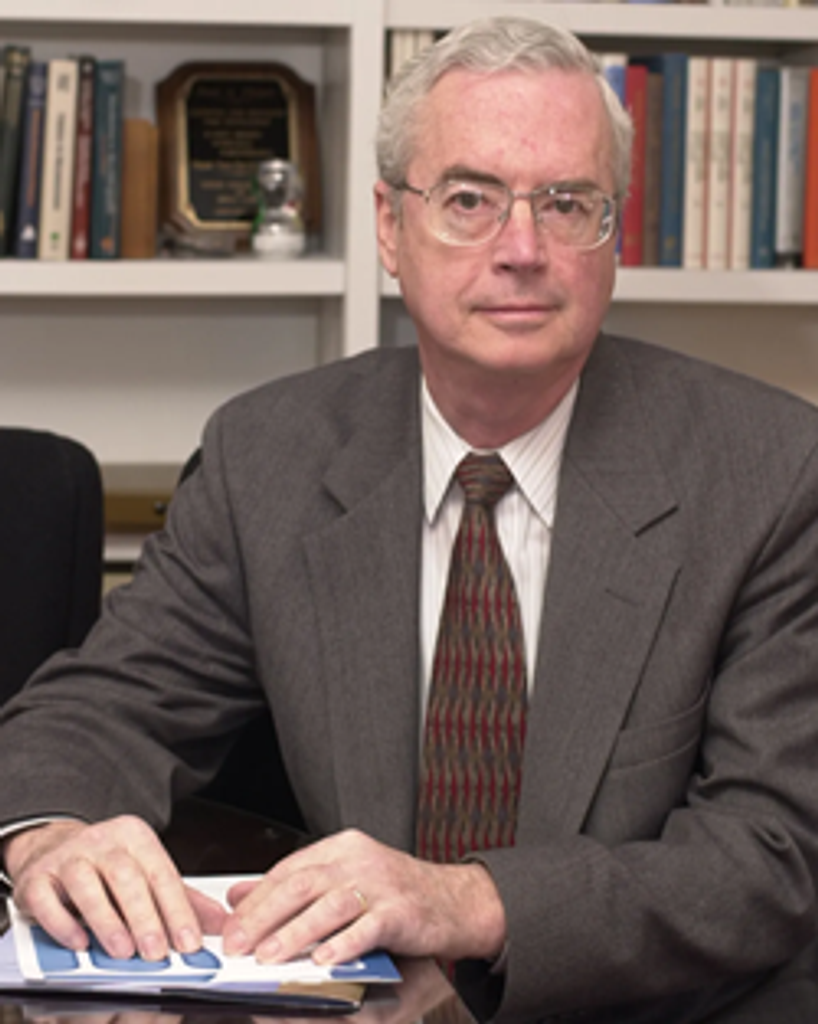


Paul Aimé Fluery V
July 20, 1939 — April 30, 2026
Mechanicsburg
Paul Aimé Fleury V (July 20, 1939 - April 30, 2026) was a renowned American experimental condensed-matter physicist and science-and-engineering administrator whose career spanned three influential settings in U.S. research: industrial basic research at AT&T/Bell Laboratories, national-laboratory leadership at Sandia National Laboratories, and academic leadership as Dean of Engineering at both the University of New Mexico and Yale University where he was also the Frederick William Beinecke Professor Emeritus of Engineering and Applied Physics and of Physics and served as the Founding Director of the Yale Institute for Nanoscience and Quantum Engineering (YINQE).
Colleagues knew Paul as a man who championed diversity and inclusion in hiring decades before those terms existed, being one of the first to hire and promote women into key scientific leadership positions. His leadership style emphasized listening just as much as speaking, and his wisdom was widely recognized and admired. As the father of three daughters, although sometimes feeling outnumbered, Paul and his wife of 62 years, Carol Anne, brought them up to believe in themselves, to pursue their passions and to work hard. His lifelong curiosity and commitment to learning was summed up in something he often said, “I still don’t know what I want to be when I grow up”. He believed passionately in the value of basic (vs applied) research and committed many pro-bono hours in his leadership roles to raise money for work that advanced knowledge and scientific research.
Paul also had a witty sense of humor (i.e. Monty Python, Fawlty Towers, Black Adder, Ernie Kovacs), loved making up stories for his children when they were young, and was happiest when holding court with his grandchildren (and sons-in-law) as they giggled while he regaled them with his “Poppa jokes”. Paul loved the beauty of the Sandia Mountains that he overlooked for many years from his home in Albuquerque and the joys of the Woodbine Farm in MD that has been in his family for centuries. Paul is survived by his beloved wife, Carol Anne Moss Fleury, a former English professor, for whom he was a devoted caretaker until the end of his life, and his three daughters: Ellen Fleury Vick (her husband James Vick and their children Ben, Aidan and Colleen), Laura Fleury, and Jennifer Fleury Metz (her husband David Metz and their children Owen and Katie). Paul passed away peacefully in Mechanicsburg, PA. A celebration of his life will take place at a later date. In lieu of flowers, please consider making a donation that supports young people interested in science: https://www.societyforscience.org/stem-outreach-programs/
Born in Baltimore, Maryland and raised in Detroit, Michigan, Paul was the proud son of Paul Aimé Fleury IV and Doris Frances (Fahm) Fleury (and grandson of inventor Paul Aimé Fleury III). Paul was the eldest of six children and is survived by his sisters Fran Fleury Schihl and Suzanne Fleury Hoffmeyer and his brother Bruce Fleury. His brothers Jack Fleury and Bob Fleury predeceased Paul.
Fleury pursued a scientific education that positioned him for the postwar boom in solid-state physics and materials science. He earned his B.S. (1960) and M.S. from John Carroll University, where he met Carol Anne, and completed a Ph.D. at MIT (1965).
Trained by the legendary physicist Charles Townes, Fleury was among the first physicists to use the newly invented laser to do fundamental science. His research interests – the microscopic origin of physical phenomena in condensed matter systems with emphasis on collective behaviors underlying magnetic, optical, electronic, acoustic, and structural properties of materials – would remain a throughline across his later roles in industry and academia.
Fleury spent roughly a quarter-century at Bell Laboratories (later AT&T, now Nokia Bell Labs) during an era when Bell Labs was a premier institution for fundamental and applied research in physics, materials, and communications technology. Starting in 1965 at Bell Labs, he applied his expertise in light scattering from solids to uncover their inner workings in a series of groundbreaking experiments into the quantum vibrational and magnetic properties of solids, detecting and studying the subtle clues that signal the onset of a change of the phases of matter.
Barely five years after his arrival at Bell Labs his evident leadership qualities led to his appointment as Head of Condensed State Research and within a few more years as Director of the Materials Research Laboratory. In that role he oversaw a critical technical innovation, the perfecting of the production of optical fiber, supervising a project which ultimately provided the optical fiber to the entire Bell system, and contributing greatly to a transformational technology of the information age. In the early 80’s he switched roles to become Head of the Physical Research Laboratory at Bell, nurturing a group that included present and future Nobel Laureates. He oversaw the growth of biophysical research and the early days of quantum optics in solids, which set the foundations for the explosion in that field in the early 2000s. In his final Bell Labs role, he served as Director of the Materials and Processing Research Laboratory. Across these posts, Fleury’s work and management responsibilities sat at the intersection of basic condensed-matter physics and the materials innovations that underpinned late-20th-century electronics and communications systems.
He was recognized with the Michelson-Morley Award in 1985 and the 1992 Frank Isakson Prize of the American Physical Society for advancing the understanding of optical effects in solids.
His successful managerial roles at Bell Labs eventually led to his appointment in 1992 as Vice President for Research and Exploratory Technology at Sandia National Laboratories where he supervised an enormous research establishment and guided projects of major national significance for defense science. Soon his passion for basic research took him to the academic sphere. Beginning in January 1996, he became Dean of the School of Engineering at the University of New Mexico.
In December 2000, Fleury joined Yale University as Dean of Engineering to lead and strengthen their efforts in Engineering and Applied Science. He earned the lifetime endowed appointment of Frederick W. Beinecke Professor of Engineering and Applied Physics. He succeeded D. Allan Bromley as dean, and later expanded his leadership into Yale’s growing quantum and nanoscale research ecosystem. He was centrally involved in recruiting faculty, turning the nascent program in biomedical engineering into a full-fledged department with strong links to the School of Medicine, and expediting the growth of the environmental engineering program to its current high visibility.
He was deeply involved in the design of the Malone Engineering Center and in the successful effort to bring a National Science Foundation Materials Research Center to Yale for the first time. In 2007, after playing a key role in setting up the Yale Institute for Nanoscience and Quantum Engineering (YINQE), he became the Founding Director of YINQE, continuing in that role after stepping down as dean at the end of 2007 alongside serving as Professor of Physics for years. Fleury continued working with Yale until his passing.
Under the Obama administration, Secretary of Energy Ernest Moniz (2013-2017) oversaw a comprehensive, Congress-mandated review (which Fleury helped conduct) of the 17 national laboratories. This led to the first-ever "State of the National Labs" report, co-authored by Fleury, which identified challenges with aging infrastructure and recommended better alignment with strategic goals, infrastructure needs, and lab-directed research (LDRD).
Alongside his administrative career, Fleury was recognized by major scientific institutions for many contributions, including advancing the optical spectroscopy of solids. He was elected to the National Academy of Engineering (1996) and the National Academy of Sciences (1999) [an extremely rare combination], and served as a Fellow for the American Association for the Advancement of Science and for the American Physical Society. His professional service also included leadership roles within the physics community, including chairing the APS Division of Condensed Matter Physics and chairing the Solid State Sciences Committee of the National Research Council, reflecting both scientific stature and a long-standing engagement with national research priorities. He had 5 patents and wrote over 100 articles, professional papers and reports, and contributed to over a dozen books in addition to writing one of his own, Coherence and Energy Transfer in Glasses (1984).
Paul is deeply missed by his family, friends and colleagues.
Guestbook
Visits: 10
This site is protected by reCAPTCHA and the
Google Privacy Policy and Terms of Service apply.
Service map data © OpenStreetMap contributors